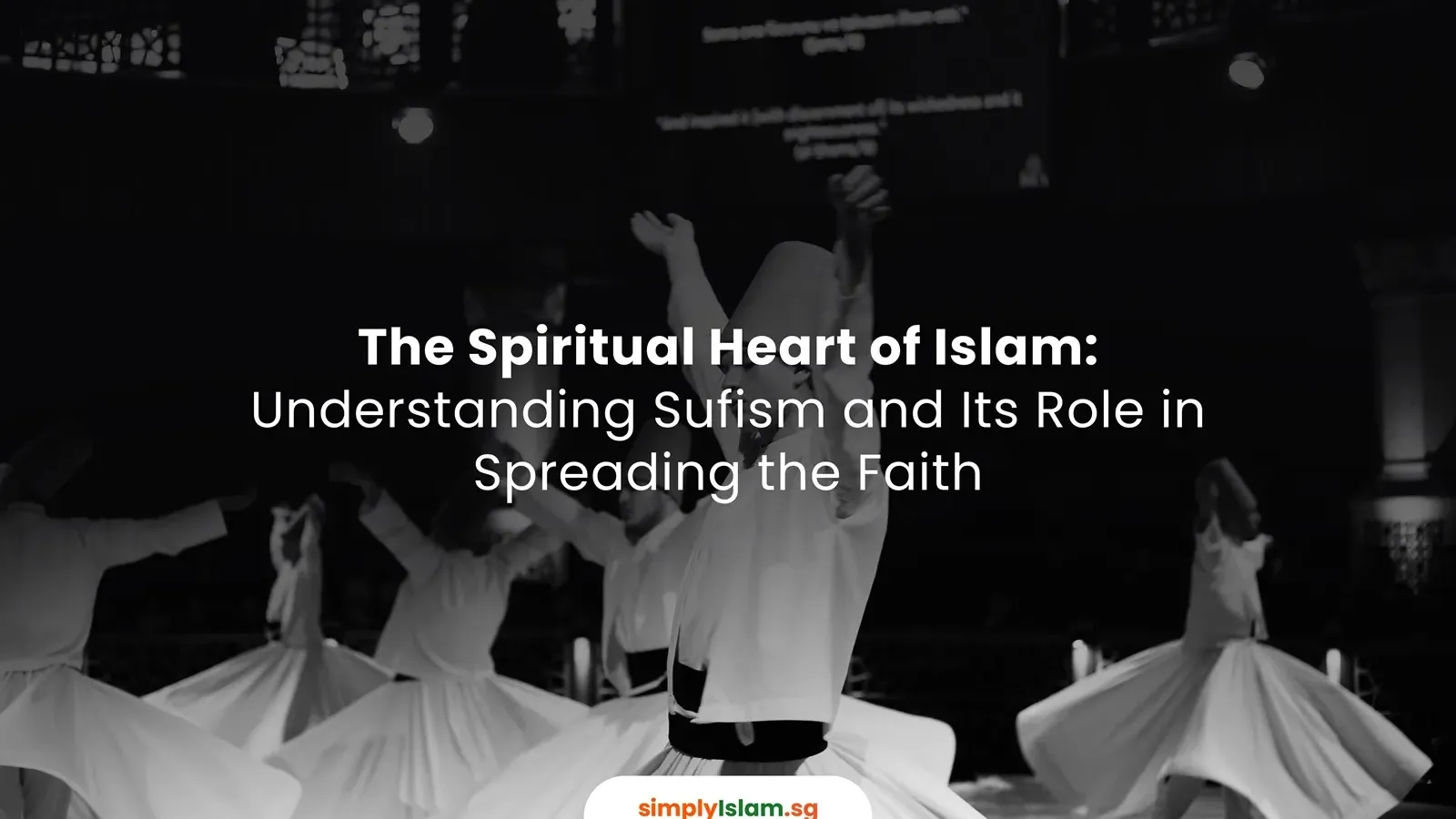

Sufism in the Philippines
CA
This paper examines Sufism (Tasawwuf) in the Philippines, explaining its principles, history, major spiritual orders (tariqas), and influence on Islamic spirituality and indigenous Muslim traditions. It traces the arrival of Sufism through early Muslim missionaries, discusses its role in character formation, religious practice, and peacebuilding.
Bismillahir Rahmanir Rahim
In The Name of Allah the Most Gracious the Most Merciful
This paper aims to expound on Sufism, it’s concepts, history in the Philippines and Muslims who are antagonist of it.
Here's a polished version with tightened grammar, smoother transitions, and clearer structure while keeping your voice and content intact:
Sufism, also known as the science of Tasawwuf, carries many meanings attributed differently by its practitioners and its detractors. Its most widely known definition traces to two root words: safa (purity) and suwf (wool cloth). In simple terms, Tasawwuf is the science of Ihsan and the purification of the self for the love of Allah. It involves specific tariqas, practices, and litanies. Its closest counterpart in the Catholic faith would be the spiritual orders , the Jesuits, Franciscans, and Dominicans. Many tariqas now exist in the Philippines, with followers scattered across the country. Despite their peace-loving nature, they have often been targets of abuse from Wahhabis.
Contrary to what critics of Tasawwuf believe, Sufism is not a sect within Islam. It is one of the Islamic sciences and a treasure of the Muslim ummah. Most Sufis are Sunni, while only a minority of Shias claim affiliation with it. As Sayyiduna Shaykh Muhammad Adil Rabbani, spiritual leader of the Naqshbandi Aliyya path, said: "Sufism is the essence of Islam." It's also worth understanding that many terms used by Sufis today did not exist in the time of the Prophet Muhammad (peace and blessings be upon him), even though their essence did. One such term is tariqa , Arabic for "path," "way," or "order." Sufi masters have long stressed the importance of following a shaykh, as captured in the saying: "Whoever does not have a shaykh, his shaykh is shaytan." Non-Muslims may find it easier to grasp tariqa as something like a "spiritual order." Many tariqas have existed throughout Islamic history, though only 41 major ones remain today. Of these, four are widely recognized by scholars as the principal orders: the Naqshbandi, Qadiri, Shadhili, and Chishti.
Within these tariqas, mureeds carry out specific practices and litanies recommended by their murshids. These include voluntary acts of worship, sending blessings upon the Prophet Muhammad (peace and blessings be upon him), remembrance of Allah (dhikr), and litanies passed down from earlier saints — alongside the ongoing work of shaping one's character after the prophetic model. This is grounded in the Hadith Qudsi: "My servant continues to draw near to Me with voluntary acts of worship so that I shall love him. When I love him, I am his hearing with which he hears, his seeing with which he sees, his hand with which he strikes, and his foot with which he walks. Were he to ask something of Me, I would surely give it to him…" (Sahih al-Bukhari, 81:38:2) — and the ayah: "Say: Obey Allah and His Messenger. But if they turn away, then indeed, Allah does not like the disbelievers." (Qur'an 3:31)
Some well-known Sufi practices in the Philippines include Mawlid celebrations, gatherings commemorating Isra wal Mi'raj, recitation of Surah Yasin on Nisfu Sha'ban, visiting the graves of the pious, and Tahlil Arwah. These traditions have endured even as Wahhabism gains adherents who view them, antagonistically, as non-Islamic innovations.
Sufism arrived to the country with the arrival of the Sharif Sab’ah or Lumpang Basih. These were the Sufi missionaries who brought Islam to the Philippines. Since then some concepts of Tasawwuf became mixed with the existing spiritual beliefs of the people in the south. These led to the development of Indigenous Islam or Ilmuh kamaasan. It is best described by Professor Yusuf Morales as “an indigenized amalgamation of Islam from the preceding schools of thought and local cultural customs. This is actually contextualized and simplified according to how the elders have understood Islam and the process of Islamization of the communities.” This, in turn, became a treasure of the Moro culture and tradition. Among the Tausugs of Sulu, it became a heirloom for the succeeding generations.
Accordingly, Ilmuh kamaasan is so wide and each family or master of it possesses a unique part of it. Nowadays, there’s a decline of its practitioners mainly because of two reasons: The growing numbers of Wahhabis who declare it as Bid’ah or Shirk and the immaturity of the present generation to carry such special knowledge. According to Sayyiduna Shaykh Khaled Abou El Fadl the rise of the Wahhabi ideology was due to the wealth of Saudi Arabia and retreat of the very rich cultural elements in the Islamic tradition like the Turks, Malays and Filipinos from the mainstream picture. This is because the nuance that they brought to the picture and the traditions of spirituality are remarkably rich nuances
There are already many practitioners of Sufism in the Philippines from different social, academic, and professional backgrounds. The major ṭuruq (Sufi orders) present in the country include the Naqshbandī ʿAlawī, Naqshbandī Chishtī, Qādirī, Rifāʿī, Shāṭṭārī, Rifāʿī-Qādirī-Shādhilī, Tijānī, and Khalwatī orders. Among them, the Naqshbandī ʿAlawī ṭarīqa has the largest following, with communities in Manila, Cebu, Zamboanga, Sulu, and Tawi-Tawi under the leadership of Shaykh Khalid Ismael, the Ameer of the order in the Philippines and a student of Shaykh Mehmet ʿAdil. Some Sunni scholars from Temboro also belong to the Naqshbandī Chishtī tradition, while many adherents of Tasawwuf are found among the students and alumni of institutions such as Ateneo de Manila University (ADMU), Ateneo de Zamboanga University (AdZU), and Western Mindanao State University (WMSU).
The Philippines is also unique in hosting one of the highest concentrations of multi-ṭarīqa certified teachers in Southeast Asia.
Individuals with Ijāzah in Forty Sufi Ṭuruq
The following Filipino scholars possess ijāzah (authorization) in forty Sufi spiritual orders, a distinction that is exceedingly rare in the Muslim world:
Shaykh Prof. Dr. Yusuf Morales – Renowned as a "walking university," he is a Filipino Muslim polymath trained in both Sunni and Shia Islamic sciences and authorized in numerous Sufi lineages.
Shaykh Al Johan Caluang Ilacad – Muqaddam of the Shādhilī–Rifāʿī–Qādirī lineage; student of al-Muḥaddith Shaykh Muhammad al-Yaqoubi and Shaykh Muhammad bin Yahya an-Ninowy.
Shaykh Abdul Warith Abdula – Student of Shaykh al-Yaqoubi and Shaykh an-Ninowy with multi-ṭarīqa authorizations.
Shaykh Alnaif Kingking – Sufi teacher trained under Shaykh al-Yaqoubi and Shaykh an-Ninowy.
Shaykh Shamir Kingking – Student of the same Syrian ḥadīth masters with authorizations in multiple Sufi orders.
Shaykh Omar Tagayan – Teacher dedicated to preserving the Sufi heritage of the Philippines.
Shaykh Haji Al Hassan Caluang – Descendant of a long Sufi lineage and holder of ijāzah in forty ṭuruq.
Atty. Datu Amir Wagas – Student of Shaykh Mehmet ʿAdil (Naqshbandī ʿAlawī) and trained in multiple Sufi traditions.
Ustadz Bernardo Hussin – Scholar possessing authorizations in numerous Sufi orders.
Dr. Calingalan Hussin Caluang – Naqīb al-Ashrāf of the Philippines, genealogical researcher of the Ahl al-Bayt, and inheritor of multiple Sufi chains.
Major Contemporary Sufi Shaykhs and Murshids in the Philippines
Among the country's notable spiritual leaders are:
Shaykh Khalid Ismael – Ameer of the Naqshbandī ʿAlawī Ṭarīqa in the Philippines and student of Shaykh Mehmet ʿAdil.
Shaykh Jamal Naqshbandi – Senior murshid based in Zamboanga.
Shaykh Ali Naqshbandi – Spiritual guide serving Western Mindanao.
Shaykh Khadzraji Tapsi – Ameer of the Sabielal Muhtadin Foundation and senior Sunni Ashʿarī-Shāfiʿī scholar.
Shaykh Ahmad Imbing – Prominent Sunni scholar and Sufi spiritual inheritor.
Mufti Mohammad Haikar Amilhamja – Islamic jurist and defender of the Sufi tradition.
Sayyid Saukhani Hussein Kimpa – Descendant of a saintly lineage and respected spiritual authority.
Sayyid Jamjam Salih – Naqshbandī Khālidī murshid.
Alongside these scholars, numerous community elders in Sulu, Basilan, Tawi-Tawi, and Zamboanga continue to preserve living oral chains (sanad) of Sufi knowledge, ensuring the continuity of the country's rich spiritual heritage across generations.
The science of Tasawwuf was once widely accepted among Sunnis in this country. However, with the rise of Wahhabism, a growing number of Muslim Filipinos have turned against it largely due to the misconceptions, lies, and fabrications spread by Wahhabis, who label Sufis and Sufism as kafir, mushrik, or bid'ah. This is not surprising, given that Muhammad Ibn Abdul Wahhab, along with the Wahhabi scholars who followed him, committed numerous atrocities against Sufis, including the desecration of saints' graves, abuse of Sufis, and the murder of Sufi masters. Even ISIS killed many Sufi scholars in the territories it invaded. Wahhabis and Salafis have the audacity to speak on Tasawwuf despite having no real knowledge of it , a boldness rooted in the bigotry and zealotry they have immersed themselves in.
To illustrate this point, consider a simple analogy: common sense dictates that if you're ill, you consult a doctor, not an engineer; if you need a building constructed, you consult an engineer, not a doctor. Likewise, even reading every book in a given field does not qualify someone to speak on it without proper understanding. Information and knowledge are not the same thing ,especially today, when many are overwhelmed with information yet starved of true knowledge. Knowledge, understanding, and practice are also distinct from one another; a person may possess one while lacking the other two. In the science of Tasawwuf, practice and experience are its very core. One cannot claim to be a Sufi without having tasted or experienced the secret of this exalted science. Non-Sufis, then, should refrain from speaking on Tasawwuf, humble themselves before its practitioners, set aside their zealotry and bigotry, and prove ,through action , that their concern is truly for the well-being of the Muslim ummah.
This should make us realize of the value of Sufism in our country and our present situation today. Sufism, the essence of Islam, which is based from the love of Allah and the Prophet Muhammad alayhis salatu was salam is effective for countering and preventing violent extremism. There have been no Sufi who became a terrorist and called for the killing of their brothers in humanity. The Sufi masters have always highlighted ,both in practice and in teaching, that Sufis should be of service to God’s creation. They have also been good exemplars for tolerance and compassion to everyone despite the differences and flaws we all have. It would also be beneficial in the character reformation of our youths today. This would improve their Adab to everyone, especially to their families which is the foundation of our community. This would then lead to the improvement of our society.
WAllahu Wa Rasuluhu A’lam
Allah(awj) and His Messenger alayhis salatu was salam knows best!