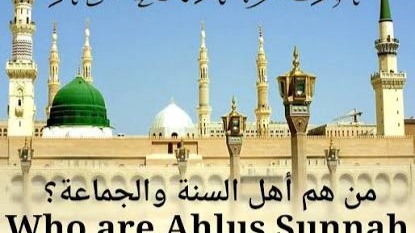

Ahlus Sunnah Wal Jama’ah in Zamboanga City
CA
This paper examines the history, beliefs, and practices of Ahlus Sunnah Wal Jama’ah (Sunni Islam) in Zamboanga, highlighting its Sufi roots, major scholars, distinctive traditions, and role in promoting moderation, peace, and resistance to religious extremism in the Philippines.
Bismillahir Rahmanir Rahim
In The Name of Allah the Most Gracious the Most Merciful
This paper aims to expound on the Ahlus Sunnah Wal Jama’ah, their beliefs,practices and arrival to Zamboanga.
The Ahlus Sunnah Wal Jama’ah, also known as Sunnis, is the majority school of thought followed by Muslims around the world. Sunnis are the followers of the 4 schools of law, namely, Hanafi,Maliki,Shafi’I and Hanbali as well as the 2 prominent schools in creed, the Ash’ari and Maturidi. This group of Muslims was the one the Prophet Muhammad alayhis salatu was salam referred as the Sawadul A’zam. The Beloved Prophet (Salla Allahu ta’ala alayhi wa Sallam) said “Without doubt my Ummah will never be gathered in misguidance. Whenever you see disagreement, then hold fast to the Sawad-e-A’zam (the great majority)” [Ibne Majah]. Aside from being followers of the 4 Madh’habs, they are known for their practice of commemorating the Mawlidun Nabi, Isra Wal Mi’raj, Nisfu Sha’ban and the science of Tasawwuf. Their arrival to Philippines dates back to the 13th century when the Sufi Missionaries arrived to Sulu and Tawi-Tawi.
The beliefs and practices of the Ahlus Sunnah Wal Jama’ah in Zamboanga is greatly influenced by the Sufi Missionaries who brought Islam to the Philippines. Some of this beliefs include the reverence to the Saints of Islam like Ghawthal Azam Sayyiduna Shaykh Abdul Qadir Jilani(qs), Wali Songo, Sayyiduna Shaykh Karim Makhdum(qs), Shariff Sab’ah or Lumpang Basih and Tuan Muda Gulam Hassan(qs). Their creed is also the same with the majority Sunnis which is the Ash’ari Creed. Other Sunnis in the region, especially the elders, believe and follow the Indigenous Islam or Ilmuh Kamaasan. The practices of the Sunnis in Zamboanga is similar with the other Sunnis around the world like commemorating Mawlidun Nabi, Holding gatherings for Isra Wal Mi’raj and Nisfu Sha’ban. They also value visiting the graves of their loved ones who passed away, revered saints and scholars. Aside from that, prominent practices include Duwaa Arwah(Prayer for the deceased) or Tahlil Arwah and Duwaa Salamat.
The Ahlus Sunnah Wal Jama’ah is the first school of thought which arrived in the Philippines along with some Keysaniyya Shias according to some scholars. The Sufi Missionaries, who arrived, locally known as Lumpang Basih or Sharif Sab’ah, brought Islam and the Sunni thought to the country. The Sufis are widely known to have played an important part in the spread of Islam to different countries around the World like the Wali Songo in Indonesia and Sayyiduna Shaykh Nizamuddin Auliya(qs) in India. The scholars of the Ahlus Sunnah Wal Jama’ah came after the arrival of Moros who studied in Al Azhar University. The Sunni Islam remained the majority until now despite the increasing number of muslims, especially among the youth, who followed the Wahhabi-Salafi ideology.
There are many scholars of the Ahlus Sunnah Wal Jama’ah in the region, some of the most prominent ones are Former Grand Mufti of Region 9 and Palawan Sayyiduna Shaykh AbdulGani Yusuf(ra),Sayyiduna Shaykh Ibrahim Ghazali,Sayyiduna Shaykh Al-Ustadz Saukhani Hussien Kimpa ,Current Grand Mufti of Region 9 and Palawan Sayyiduna Shaykh AbdulBaki Abubakar, Sayyiduna Shaykh Khadzraji “Guru Bata” Tapsi, Sayyiduna Shaykh Ahmad Imbing and Sayyiduna Shaykh Muktar Waning. The Former Grand Mufti of Region 9 and Palawan Sayyiduna Shaykh AbdulGani Yusuf(ra) was revered as a master of Islamic Spirituality,Indigenous Islam and Shariah. He was one of the first muslim scholars in the region who played a huge part in establishing interfaith dialogue. Some of his students are the Senior Wahhabi scholar Ustadz Muhaimin Sakili, Senior Sunni scholar Ustadz Khadzraji Tapsi, Professor Alih Sakaluran Aiyub and Professor Yusuf Morales. His contemporary, Sayyiduna Shaykh Ibrahim Ghazali championed the path of Ahlus Sunnah Wal Jama’ah in Sulu, preserving it from deviation and promoted peace among the Tausugs.
The Current Grand Mufti of Region 9 and Palawan Sayyiduna Shaykh AbdulBaki Abubakar hafizahullah is one of the most senior scholar in the city, spiritual adviser of the MNLF, and a colleague of the former Grand Mufti Sayyiduna Shaykh AbdulGani Yusuf(ra). He is a great pole of Sunni Islam in the country who is respected and admired even by the senior scholars of Al Azhar University today. Sayyiduna Shaykh Khadzraji “Guru Bata” Tapsi hafizahullah is the president of Sabielal Muhtadin, the foremost Sunni organization in the country providing the teachings of Ahlus Sunnah Wal Jama’ah. Sayyiduna Shaykh Ahmad Imbing hafizahullah and Sayyiduna Shaykh Muktar Waning hafizahullah are among the known scholars who rose to be defenders of Sunni school of thought in the region.
Sunni Islam has many points of differences from the two groups present in the city, the Shias and Wahhabis. However, they still share some similarities. These 3 schools of thought follows the Qur’an and Sunnah yet differed in its interpretation. Both Sunnis and Shias commemorate Mawlidun Nabi unlike the Wahhabis who labeled it either Bid’ah or Shirk. These two groups also don’t practice Takfir(declaring others as disbelievers) and Tabdi’(declaring other Muslims as innovators), which are known practices of Wahhabis. The Sunnis and Shias differed in their approach to the Qur’an and Sunnah. The former gave great reverence to the companions of the Prophet while the latter resolved to follow the family of the Prophet. Shias are known for their practice of cursing the companions and wives of the prophet from their beliefs that they committed atrocities to Allah,the Prophet Muhammad alayhis salatu was salam and his Ahlul Bayt. This set them apart from the Sunnis, nonetheless, they are still Muslims according to most Sunni scholars except for those who adopted heretic beliefs.
The Ahl al-Sunnah wa al-Jamāʿah is distinguished from other Islamic denominations by its profound love and reverence for the Prophet Muhammad ﷺ, his blessed family (Ahl al-Bayt), his noble Companions (Ṣaḥābah), the Awliyāʾ (Friends of Allah), and the righteous scholars who have faithfully preserved the Islamic tradition throughout the centuries. One of its defining contributions to Islamic civilization is the preservation of the sciences of ijāzah (scholarly authorization) and sanad (chains of transmission), which safeguard the authenticity of Islamic knowledge by tracing its transmission through successive generations back to the Prophet Muhammad ﷺ.
Likewise, the Ahl al-Sunnah wa al-Jamāʿah has preserved many of the enduring spiritual and devotional traditions of Islam, including authentic taṣawwuf (Sufism) and the commemoration of the Mawlid al-Nabī, practiced in accordance with the principles of the Sharīʿah and the teachings of qualified scholars. These traditions cultivate love for Allah and His Messenger ﷺ, spiritual purification, sound character, and moderation. Notably, violent extremist and terrorist movements neither commemorate the Mawlid nor embrace the authentic science of taṣawwuf, which has historically emphasized mercy, self-discipline, and the purification of the soul.
Throughout Islamic history, many of the most influential defenders, reformers, scholars, saints, and leaders of the Muslim Ummah have emerged from the Sunni tradition. Among them are Ghawth al-Aʿẓam Sayyidunā Shaykh ʿAbd al-Qādir al-Jīlānī (qaddasa Allāhu sirrah), Mawlānā Jalāl al-Dīn Rūmī (qaddasa Allāhu sirrah), Ḥujjat al-Islām Imām Abū Ḥāmid al-Ghazālī (qaddasa Allāhu sirrah), Sulṭān Muḥammad al-Fātiḥ (raḍiya Allāhu ʿanhu), Sulṭān Ṣalāḥ al-Dīn al-Ayyūbī (raḍiya Allāhu ʿanhu), Mujaddid Alf-i Thānī Shaykh Aḥmad Sirhindī (qaddasa Allāhu sirrah), Shaykh al-Islām Imām Aḥmad Riḍā Khān (qaddasa Allāhu sirrah), Amīr ʿAbd al-Qādir al-Jazāʾirī (qaddasa Allāhu sirrah), and Imām Shāmil al-Naqshbandī (qaddasa Allāhu sirrah). Their lives exemplified the harmonious integration of sound creed, sacred knowledge, spiritual excellence, moral integrity, and service to the Muslim community, leaving a legacy that continues to inspire Muslims around the world.
In a lecture of Sayyiduna Shaykh Hamza Yusuf, the student of the great Muhaddith and Faqih Sayyiduna Shaykh Abdullah Bin Bayyah, he narrated a hadith of the Prophet Muhammad alayhis salatu was salam referring to Sayyiduna Sultan Muhammad Al Fatih Al Hanafi Al Maturidi An Naqshbandi II(Mehmed the Conqueror) saying:, ‘Verily you shall conquer Constantinople. What a Blessed leader will their leader be, and what a blessed army will that army be!’ [Musnad Ahmad, Al Hakim, al Jami’ al Saghir]. Sayyiduna Shaykh Hamza Yusuf said that when He(Sayyiduna Sultan Muhammad Al Fatih Al Hanafi Al Maturidi An Naqshbandi II) He came into the city(Constantinople) and conquered the city, the Prophet praised him(referring to the hadith above), He was by consensus Hanafi Maturidi and Naqshbandi so the Prophet was praising a Hanafi Maturidi Naqshbandi. From this, we can see that the Ahlus Sunna Wal Jama’ah is the true representation of Islam. It is the most moderate and tolerant denomination.
Sayyiduna Shaykh Muhammad Al Yaqoubi in his speech on refuting ISIS said: “You have to have Muslim scholars telling you how to save the minds of our next generation from being brainwashed. War starts in the minds of people. We may defeat ISIS now but if we don’t defeat its ideology, we will have another generation coming, to fight us again. This is why it’s time, for Muslim governments, to have scholars deciding on how to defeat the Ideology of ISIS. And this would be only by reviving Sunni Islam, mainstream Islam. Islam of the four schools of thought(Hanafi,Maliki and Shafi’i). Islam of Sufism Not Extremism. That Islam actually brings life, not death, brings light not darkness.”.
These statements are essential and deserve careful consideration in any serious effort to counter and prevent extremism at its roots. Governments, counterterrorism practitioners, policymakers, and peace advocates should adopt a more comprehensive approach that recognizes the multifaceted nature of extremism, rather than focusing solely on its political and socio-economic dimensions. Lasting peace requires addressing not only external conditions but also the ideological and theological factors that can contribute to radicalization.
Finally, we remind ourselves and our brothers and sisters in Islam to follow the path of love, mercy, and moderation. Let us strive to embody open-mindedness, humility, tolerance, compassion, and mutual respect. Our greatest exemplar is the Prophet Muhammad ﷺ, whose life was a manifestation of mercy, wisdom, and justice. We pray that Allah protects us from all forms of bigotry, fanaticism, and zealotry, and that He blesses us with sincere love for His Messenger ﷺ, enabling us to emulate his noble character in our words, actions, and dealings with others. Āmīn.
WAllahu Wa Rasuluhu A’lam
Allah(awj) and His Messenger alayhis salatu was salam knows best!